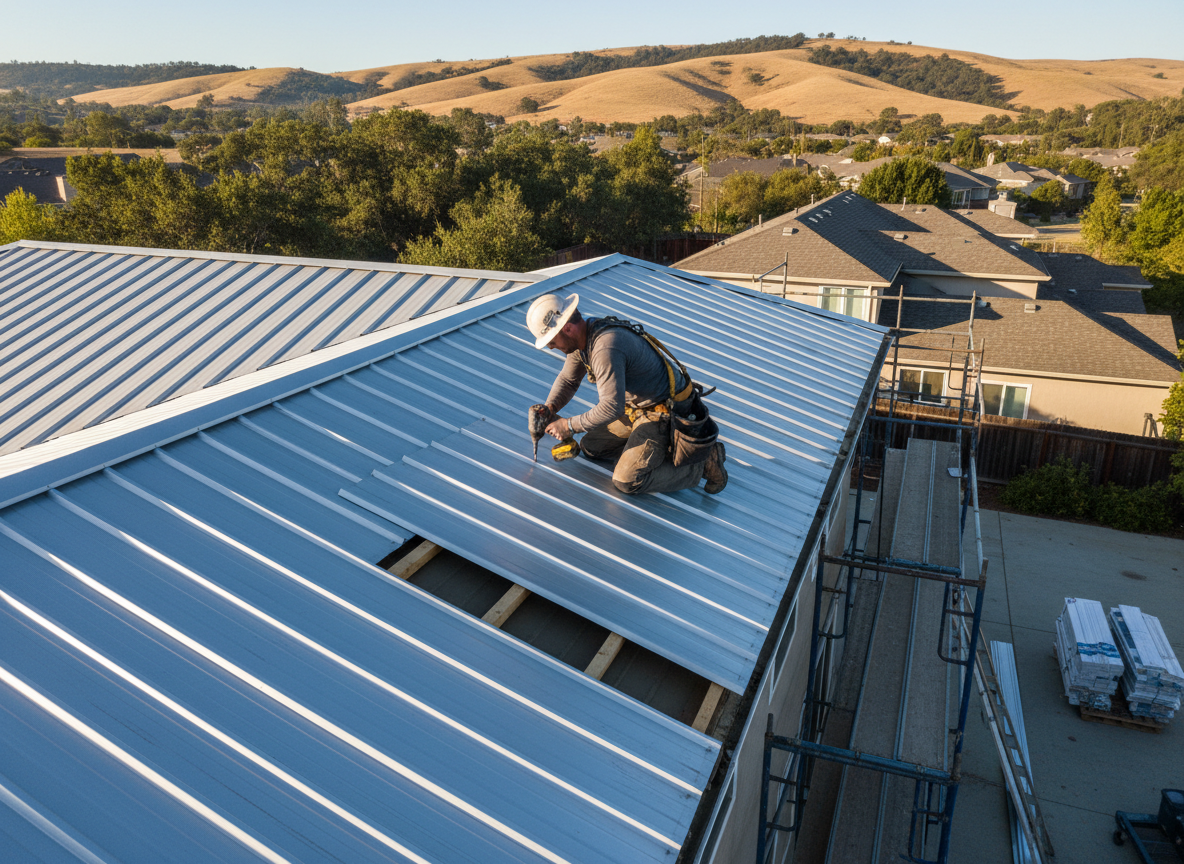
Metal roof installation in Oakley requires careful attention to the neighborhood's mix of early 1900s frame homes and mid-century builds that often sit on sloped lots. These roofs must handle Cincinnati's freeze-thaw cycles, heavy spring rains, and occasional high winds that funnel through the Mill Creek valley. Proper underlayment and ventilation prevent condensation that can form under metal panels during humid Ohio summers, a detail that matters more on older homes with limited attic space.
Homeowners in Oakley and nearby Hyde Park frequently choose standing-seam systems for their ability to shed snow loads without the ice dam problems common on asphalt shingles. Installation crews must account for the steeper pitches found on many Victorian-era houses while ensuring fasteners penetrate rafters rather than just sheathing. Local building codes in Hamilton County call for specific wind uplift ratings that change with roof height and exposure on the area's rolling terrain.
Edge detailing around chimneys and valleys becomes critical when retrofitting metal over existing decks that may have hidden rot from decades of Cincinnati rainfall. Crews check for proper drip edge and step flashing integration to keep water moving away from foundation walls on these compact urban lots. The result is a roof that performs through the region's full seasonal swing without the frequent repairs asphalt needs after harsh winters.
Fixora Dynamics works from its Cincinnati base to coordinate material deliveries that avoid peak traffic delays on I-71, keeping projects on schedule even during unpredictable spring weather windows.
Technician insight
In Oakley, the thing that catches most people out with Metal roof installation is how the older homes on these hills trap heat under the panels if you skip the ridge vent upgrade, turning a simple swap into condensation problems after the first real winter.
Oakley Bungalow Retrofit
A 1920s Oakley home showed repeated shingle blow-offs after winter storms. We found deteriorated decking and poor attic airflow. We installed a standing-seam metal system with added ridge ventilation and sealed all valleys. The roof now sheds snow cleanly and has stayed dry through two full seasons of Cincinnati weather.
How it works
- 1
Site Assessment
Measure the existing roof, inspect decking condition, and note ventilation needs specific to Oakley homes.
- 2
Material Selection
Choose gauge and finish suited to local wind exposure and snow shedding requirements.
- 3
Preparation
Remove old roofing if needed, repair decking, and install ice-and-water shield at eaves and valleys.
- 4
Panel Installation
Fasten panels with proper spacing for thermal movement while sealing all penetrations.
- 5
Final Inspection
Check flashing, ridge vents, and trim details before cleanup and homeowner walkthrough.
Pricing
Cost depends on roof size, pitch, and chosen panel system; quotes provided after on-site visit.