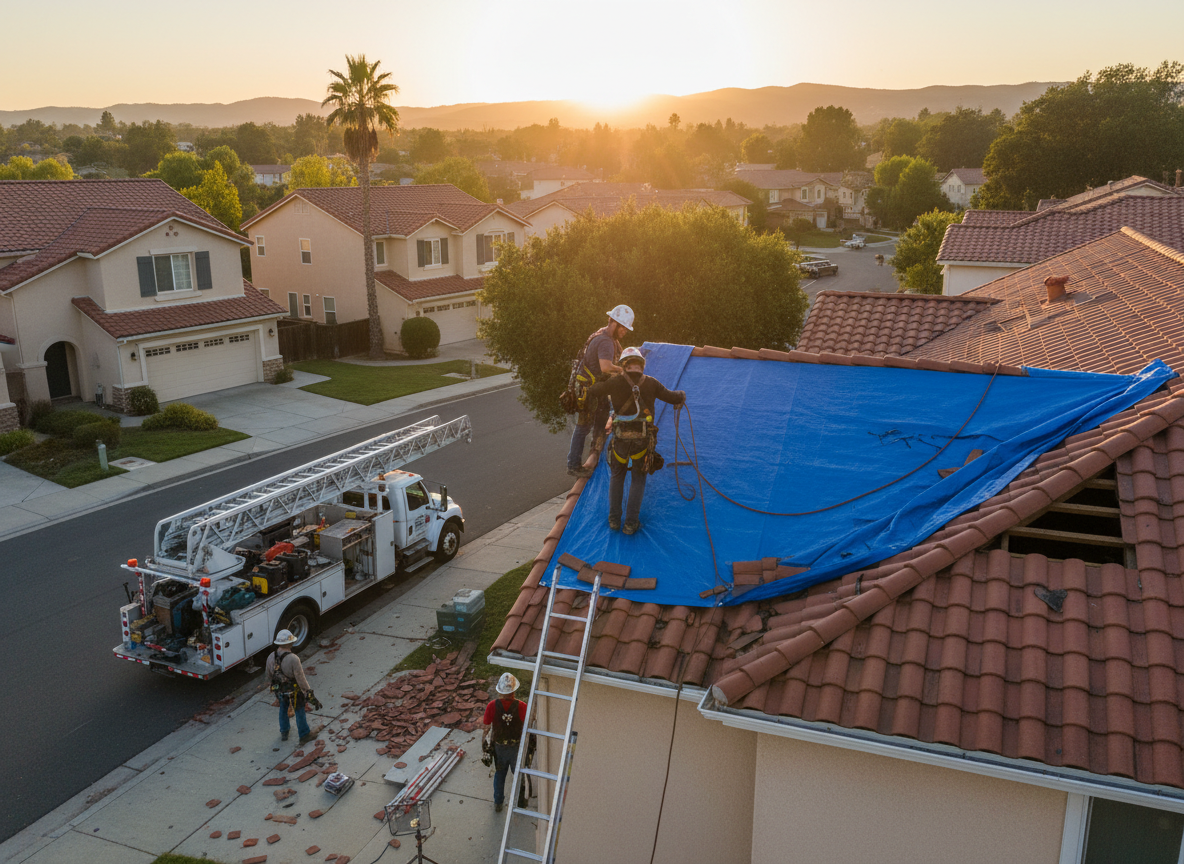
Oakley sits on the east side of Cincinnati with many early twentieth-century homes that have steep roof pitches and multiple valleys where water collects fast during Midwest storms. When a shingle tears or flashing lifts, water can reach the attic within hours, especially on the older brick-and-frame houses common along Madison Road and surrounding blocks. Emergency calls often involve tarping first, then assessing whether the existing underlayment can hold until a full replacement or if targeted flashing and shingle work will stop the intrusion.
Cincinnati building codes require permits for any roof work that exceeds ten percent of the surface, so crews must document damage immediately and coordinate with the city inspector on the same day when possible. In Oakley the terrain slopes toward the Little Miami River corridor, which means runoff from neighboring properties can push extra water against foundation walls and lower roof edges. Technicians carry portable pumps and moisture meters to check for hidden saturation in the decking before leaving a temporary seal.
Materials matter on these quick-response jobs. Asphalt shingles remain the most common covering, but many Oakley roofs still have original slate or clay tiles that demand matching pieces rather than generic substitutes. Crews keep a stock of both on the truck because a single missing tile on a hip can funnel water straight into the second-floor ceiling during the next rain. All temporary fixes are installed with the understanding that the homeowner will schedule permanent repairs once weather allows safe access.
Technician insight
In Oakley the thing that catches most people out with Emergency roofing service is how water travels along the underside of the original slate or asphalt layers on the 1920s homes before showing up inside, especially on the north-facing slopes that stay shaded and hold moisture longer after a storm.
Sudden Leak After Heavy Rain
Water began dripping through a second-floor ceiling on a Madison Road brick home during an overnight storm. Inspection showed lifted flashing at a rear valley where two roof planes met an addition. The crew installed a reinforced tarp and sealed the valley edges the same morning, stopping further interior damage until permanent flashing replacement could be scheduled.
How it works
- 1
Initial Call And Dispatch
Answer the 24/7 line, gather details on the leak location and weather conditions, then send the nearest crew from the Cincinnati base.
- 2
On-Site Assessment
Inspect the roof, attic, and interior water paths, photograph damage, and determine whether a temporary tarp or immediate patch is required.
- 3
Stabilize The Roof
Install tarps, replace damaged flashing, or apply emergency sealants rated for the current temperature and wind exposure.
- 4
Documentation And Next Steps
Provide a written report with photos, note any code requirements, and schedule follow-up permanent repairs once the weather window opens.
Pricing
Upfront quotes given on site after inspection; final cost depends on roof access, material type, and extent of hidden damage.