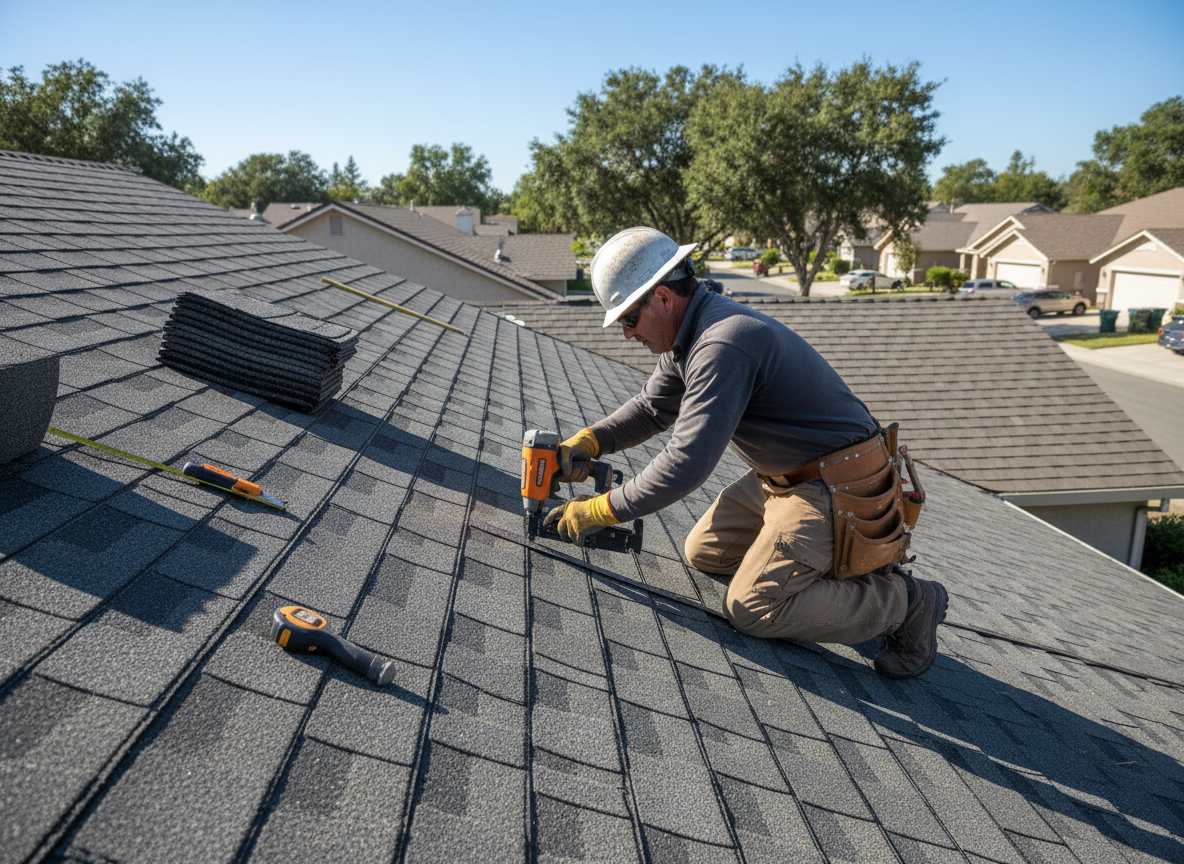
Oakley features many early-20th-century bungalows and two-story frame homes whose roofs often carry three or more layers of asphalt shingles. Adding another layer without removing the old ones increases weight on rafters that were never engineered for it and traps moisture against the decking. We always pull down to the sheathing on these properties so we can check for rot along the eaves and around plumbing vents before installing new synthetic underlayment and 30-year architectural shingles.
Cincinnati's freeze-thaw cycles and sudden downpours put extra stress on ridge vents and step flashing. In Oakley, where many lots slope toward the street, water can back up under the shingles on the uphill side if the starter course and drip edge are not installed with the correct overhang. We use ice-and-water shield in all valleys and along the eaves at least six feet up the roof plane, then seal every nail head with asphalt cement to keep wind-driven rain out.
Permits in Hamilton County require the new roof to meet current wind-uplift standards. That means using shingles rated for at least 110 mph and installing them with the correct number of nails in the right locations. Homeowners sometimes try to skip the permit and end up with insurance problems later; we handle the paperwork and schedule the inspection so the job is documented correctly.
Access on Oakley's narrow streets and tight side yards often requires staging materials on the front lawn and using ladders instead of boom trucks. We protect driveways and sidewalks with plywood and tarps and remove all debris the same day so neighbors are not affected.
Technician insight
In Oakley the thing that catches most people out with Asphalt shingle roofing is how the older bungalows sit on sloped lots that funnel spring rainwater straight into the eaves; if the drip edge and starter course are not set with the right overhang the water works under the shingles before the underlayment can stop it.
North-Slope Leak on Oakley Bungalow
Homeowner reported water stains on the second-floor ceiling after a heavy rain. We found the north slope still had the original 1990s shingles with missing granules and lifted tabs. We tore off two layers, replaced several sheets of rotted decking along the eave, installed new underlayment and architectural shingles, and added extra ridge venting. The attic stayed dry through the next three storms.
How it works
- 1
On-Site Assessment
We measure the roof, check decking condition, and note access limitations specific to the Oakley address.
- 2
Material Selection
Homeowner chooses shingle style and color; we confirm wind rating and underlayment requirements for Hamilton County.
- 3
Tear-Off and Deck Prep
Old shingles and underlayment are removed, damaged sheathing is replaced, and new drip edge is installed.
- 4
Installation
Synthetic underlayment, ice-and-water shield in valleys, and new shingles are applied with proper nailing pattern.
- 5
Final Walk-Through
We inspect every edge, clean the site, and provide the homeowner with the warranty registration.
Pricing
Upfront written quotes after we measure the roof; price depends on layers to remove, deck repairs, and access.